There’s a specific kind of frustration in pulling out what should be clean dishes and finding dried food still stuck to a plate, or a cloudy film coating every glass in the load. Your dishwasher ran its full cycle, made all the right noises, and still didn’t do its one job.
The good news, based on what we actually see on service calls across Abilene, is that this almost never means the dishwasher is failing wholesale. It usually means one specific thing is preventing proper cleaning, and most of these causes are things you can check yourself before assuming you need a repair visit.
What You’ll Learn in This Guide
We’ll go through every real reason dishes come out dirty after a full cycle, starting with the simplest fixes and working toward the ones that genuinely need a technician. I’ll also cover the loading mistakes that quietly sabotage even a perfectly functioning dishwasher, because this accounts for more “broken dishwasher” calls than people expect.
Why Are My Dishes Still Dirty After a Full Cycle?
1. Clogged Spray Arms
The spray arms are the rotating arms inside your dishwasher that shoot water onto your dishes. Their holes are small by design, which means they clog easily with mineral deposits, food particles, or general debris over time. When even a few holes are blocked, water distribution becomes uneven, and dishes in certain spots simply don’t get properly sprayed.
What to check: Remove the spray arms if your model allows it, and hold them up to a light. Look for holes that appear blocked or discolored compared to others. A toothpick or thin wire can usually clear minor clogs.
2. Dirty or Clogged Filter
This connects directly to a drainage issue we covered in a previous post, but it affects cleaning performance just as much as drainage. A clogged filter doesn’t just prevent water from draining out, it also recirculates dirty water back onto your dishes during the wash cycle, which can leave food residue and a cloudy film even on items that started relatively clean.
What to check: Remove and inspect the filter assembly at the bottom of the tub. If it’s visibly caked with food debris, that’s likely contributing to the problem.
3. Hard Water Mineral Buildup
This is a big one locally. Hard water leaves mineral deposits on interior components, including spray arm holes, the water inlet valve, and even directly on your dishes and glassware as a cloudy film. Over time, this buildup can genuinely impair cleaning performance, not just leave cosmetic spots.
What to check: If you notice white, chalky residue on the interior of the dishwasher tub or consistently cloudy glassware, hard water mineral buildup is very likely a contributing factor, if not the primary cause.
4. Using the Wrong Detergent or Not Enough of It
This sounds almost too simple to matter, but detergent choice and quantity genuinely affects cleaning outcomes more than people expect. Old, clumped detergent, using dish soap instead of dishwasher-specific detergent, or under-filling the dispenser can all lead to visibly dirty dishes even with a perfectly functioning machine.
What to check: Confirm you’re using dishwasher-specific detergent, check that it hasn’t clumped from moisture exposure, and make sure the dispenser is filling to the recommended line.
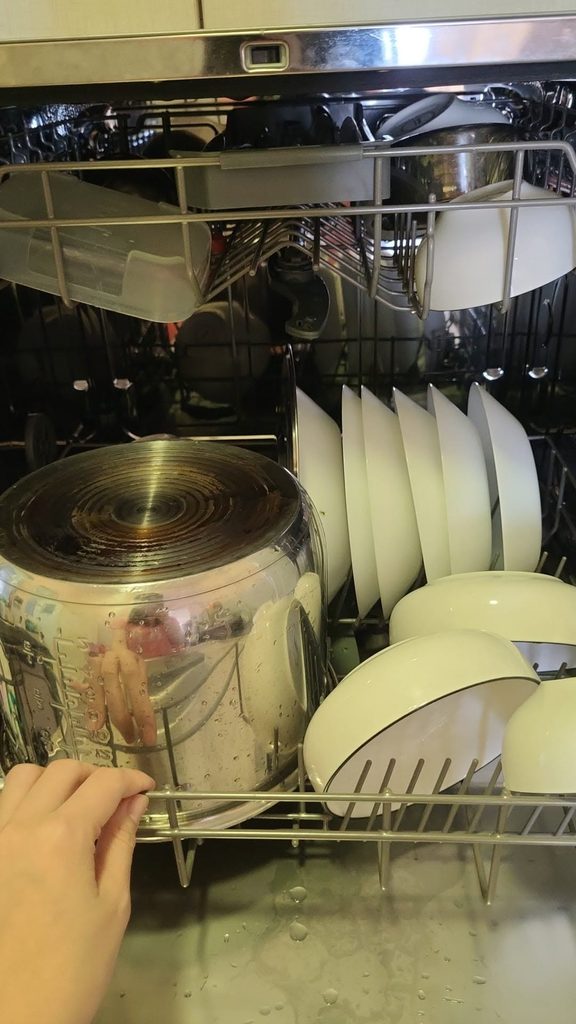
5. Overloading or Improper Loading
Dishwashers are designed with specific water spray patterns in mind, and overloading the racks blocks those pathways. Large items like baking sheets or oversized bowls positioned incorrectly can shield smaller dishes from ever getting properly sprayed, regardless of how well the machine itself is functioning.
What to check: Make sure dishes aren’t nested together or blocking each other, and that nothing large is positioned in a way that blocks the spray arm’s rotation.
6. Water Temperature Issues
Dishwashers rely on hot water to effectively dissolve grease and food residue. If your water heater is set too low, or there’s a water heating issue affecting the water coming into your dishwasher, cleaning performance drops noticeably even with everything else working correctly.
What to check: Run your kitchen sink hot water tap before starting the dishwasher to ensure hot water is already in the line, and confirm your water heater is set to at least 120 degrees Fahrenheit.
7. Failing Wash Pump or Motor
If everything above checks out and dishes are still coming out visibly dirty, a weakening wash pump motor could be the culprit. This component is responsible for generating the water pressure that powers the spray arms, and as it wears down, cleaning performance gradually declines.

Common Causes Comparison Table
| Cause | How Common | DIY-Friendly? | Typical Fix Cost | Key Warning Sign |
|---|---|---|---|---|
| Clogged spray arms | Very common | Yes | Free-Low | Visible blocked holes |
| Clogged filter | Very common | Yes | Free | Food debris in filter |
| Hard water buildup | Very common locally | Moderate | Low | Chalky residue, cloudy glasses |
| Detergent issues | Common | Yes | Free | Clumped or old detergent |
| Overloading | Common | Yes | Free | Dishes nested or blocking arms |
| Water temperature | Less common | Yes | Free-Low | Grease not dissolving |
| Failing wash pump | Less common | Not recommended | Moderate | Gradual decline in performance |
Why Hard Water Hits Abilene Dishwashers Especially Hard
Our water supply runs harder than a lot of regions, which means mineral deposits build up faster on every component that comes into contact with water inside your dishwasher. This isn’t just a cosmetic annoyance with cloudy glasses. Over months and years, hard water buildup can restrict spray arm holes, affect the water inlet valve’s function, and generally reduce cleaning efficiency across the board.
Using a rinse aid consistently, and periodically running a dishwasher cleaner cycle, genuinely helps offset this in ways that matter more here than in areas with softer water.
When to Call a Professional
A few signs point toward needing an actual technician rather than continuing to troubleshoot:
- You’ve cleaned the filter, checked the spray arms, and confirmed detergent and water temperature are fine, and dishes are still coming out dirty
- Cleaning performance has gradually declined over weeks or months rather than appearing suddenly
- You suspect the wash pump itself based on reduced water pressure inside the tub
- The dishwasher makes unusual sounds during the wash cycle that weren’t there before
Frequently Asked Questions
Bringing It All Together
Dirty dishes after a full cycle almost always trace back to something specific and fixable: a clogged spray arm, hard water buildup, a loading habit, or a detergent issue. Working through these in order before assuming the machine itself has failed saves both time and unnecessary repair costs.
Still dealing with dirty dishes after checking the basics? Call us today at (325) 331-4467 for same-day or next-day dishwasher repair in Abilene, and let’s get your dishes properly clean again.